How Long Does PPF Last? Complete Guide
Most high-quality paint protection film lasts between 5 and 10 years, and premium options can push past that range when installed correctly and maintained consistently. The film helps protect paint from road debris and rock chips, and many manufacturers back their products with 10-year warranties covering yellowing, cracking, and delamination.
Key Takeaways
- Most high-quality paint protection film lasts 5 to 10 years.
- Many premium PPF brands offer 10-year warranties covering yellowing, cracking, and delamination.
- UV exposure, road salt, and daily driving shorten real-world PPF lifespan.
- Self-healing PPF fixes minor scratches, but not UV damage or adhesive failure.
- Daily drivers may need PPF replacement closer to 5 years, while garage-kept vehicles are more likely to reach the upper end of the lifespan range.
How Long Does PPF Last on a Car?
Most high-quality paint protection film lasts 5 to 10 years on a car, and some premium films may perform beyond that range with proper installation and maintenance. Many leading manufacturers offer 10-year limited warranties covering issues such as yellowing, cracking, and delamination. PPF helps protect paint from road debris and rock chips by absorbing impact before damage reaches the clear coat, making physical protection its primary function.
How long that barrier holds depends on more than which brand is on the box. Film thickness, TPU chemistry, top-coat technology, and installation quality all influence real-world PPF lifespan. Real-world lifespan depends on film quality, installation precision, and exposure. A garage-kept vehicle on a regular wash schedule will retain clarity and adhesion significantly longer than a daily driver stored outside year-round, regardless of film brand.
What Affects PPF Lifespan?
UV exposure, road salt, and driving habits drive most PPF lifespan factors. Each of the following conditions shortens or extends how long a film performs in real use:
- UV exposure: Constant sunlight causes yellowing over time; prolonged exposure leads to cracking and hazing as the top coat breaks down.
- Road salt and winter contaminants: Salt buildup and winter debris can affect PPF edges over time, increasing the risk of staining, contamination, and adhesive problems if not properly cleaned.
- Heat cycles: Repeated expansion and contraction from temperature swings stresses the film and adhesive layer over time.
- Daily driving: Every mile adds exposure to road debris, airborne contaminants, and physical impact against the film surface.
- Garage storage: Reduces UV radiation and limits extreme weather, which meaningfully extends durability in real-world use.
- Climate:
Climate affects PPF longevity as much as mileage. High-sun areas increase UV exposure, while colder regions with road salt create additional environmental stress that can shorten real-world lifespan without proper maintenance.
How Do Installation Quality and Maintenance Extend PPF Life?
Installation quality extends PPF life by preventing edge lifting and weak bond lines. Poor prep and improper application are leading causes of bubbling and peeling. A consistent maintenance routine can push lifespan toward 10 years or beyond. pH-neutral soap protects the top coat, and PPF sealants can improve surface protection, gloss, and resistance to contamination.
Routine care matters more than occasional detailing. Regular washing removes road film, and specialized sealants help preserve clarity on premium TPU paint protection film.
What Are the Signs That PPF Needs Replacement?
Edge lifting is one of the clearest replacement signs because it points to adhesive failure. When any of the following defects become visible, the film is no longer performing as designed:
- Edge lifting: Corners or panel edges begin to separate from the paint surface, indicating adhesive breakdown.
- Yellowing: The film takes on a discolored, amber tone from prolonged UV exposure and degraded inhibitors.
- Cracking: Surface fractures in the top coat that cannot be repaired by heat or sealant.
- Hazing: A cloudy or milky appearance that reduces visual clarity across the film surface.
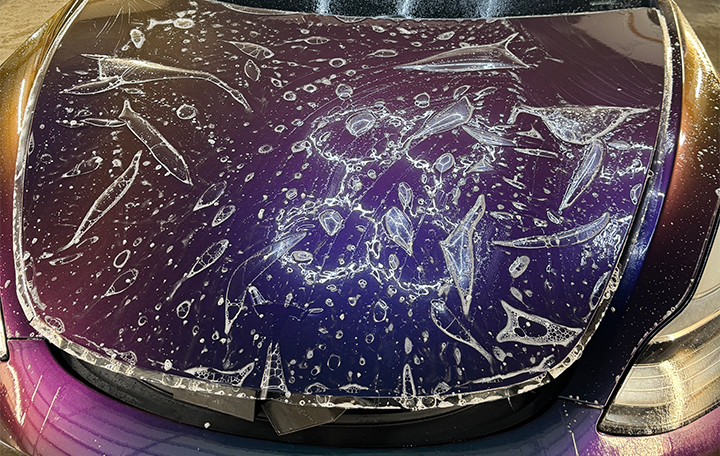
- Bubbling: Air or moisture trapped beneath the film, often caused by installation issues or failed adhesive.
- Peeling: Film lifts away from the paint surface in sheets, typically starting at edges and spreading inward.
If those defects appear across multiple panels, the film is no longer providing reliable surface protection and should be removed.
How Does PPF Compare With Ceramic Coating and Vinyl Wrap?
PPF physically shields paint from impacts, ceramic coating adds hydrophobic properties, and vinyl wrap changes appearance with less durability. PPF lasts up to 10 years, while ceramic coating typically lasts 2 to 5 years and vinyl wrap typically lasts 3 to 5 years depending on material quality, installation, and exposure.
| Protection Type | Typical Lifespan | Main Function | Primary Strength |
|---|---|---|---|
| Paint Protection Film (PPF) | 5 to 10 years | Physical impact protection | Road debris and rock chips |
| Ceramic coating | 2 to 5 years | Surface protection | Hydrophobic properties and UV protection |
| Vinyl wrap | 3 to 5 years | Appearance change | Color and finish customization |
Ceramic coating can be applied over PPF. That combination adds water-repelling behavior and extra UV protection, while the film still takes the impact load. Ceramic coating lifespan matters most when owners want gloss and easier cleaning. Vinyl wrap lifespan matters more when styling is the priority. Each protection type also carries a different price point; to see how PPF investment compares across coverage levels and vehicle sizes, see our PPF Cost guide.
How Do Premium PPF Brand Warranties Compare?
Most premium paint protection film brands back their products with a 10-year limited warranty. Standard coverage typically includes yellowing, staining, cracking, blistering, and delamination. Warranty length reflects manufacturer confidence in the film's chemistry and durability under real-world conditions.
| Coverage Tier | Typical Warranty Length | What's Usually Covered |
|---|---|---|
| Premium PPF | 10 years | Yellowing, cracking, blistering, delamination, staining |
| Mid-range PPF | 5 to 7 years | Basic yellowing and delamination |
Warranty length and real-world lifespan are not the same thing. A 10-year warranty shows manufacturer confidence, but UV load, road salt, and installation quality still determine when the film actually needs replacement. After 8 to 10 years, some films may begin showing age-related issues such as edge lifting, depending on exposure and maintenance.
Does Self-Healing PPF Last Longer?
Self-healing PPF repairs minor surface scratches and swirl marks, but it does not extend the film indefinitely. Heat from sunlight or warm water activates the polyurethane top layer. That self-healing action improves appearance, not full film survival; UV breakdown, adhesive failure, and road salt damage still limit lifespan in the same way.
Self-healing properties matter most for daily drivers that pick up light marring. They keep the surface looking cleaner between washes, especially on black paint.
What Role Do TPU and UV Inhibitors Play in PPF Durability?
TPU (Thermoplastic Polyurethane) is the primary material used in premium PPF. It provides flexibility, durability, and self-healing properties. UV inhibitors are embedded in TPU layers to prevent yellowing and slow breakdown from solar radiation.
Advanced inhibitors help the film resist discoloration during long sun exposure. That material science explains why premium TPU paint protection film costs more and lasts longer; higher-quality TPU formulations generally provide better clarity, flexibility, and resistance to environmental stress over time.
How Can Garage Storage and Daily Driving Change PPF Longevity?
Garage storage helps PPF longevity by limiting UV radiation and extreme weather. Daily driving does the opposite by increasing road stress and environmental factors every day. Daily drivers often need replacement closer to the 5-year mark, while garage-kept vehicles more often reach the upper end of the range. A car that sits outside all summer ages faster than one kept under cover. Paint protection film protects best when storage, climate, and wash habits stay consistent. That pattern often matters more than annual mileage alone.
In Pennsylvania, winter road salt and summer UV exposure can increase environmental stress on PPF. Vehicles driven year-round face more exposure, which makes consistent garage storage and routine washing especially important.
When Should PPF Be Replaced?
PPF should be replaced when edge lifting, yellowing, cracking, or hazing becomes visible. Replacement timing depends on a combination of visible condition and driving context:
- Visible defects across multiple panels: Edge lifting, bubbling, hazing, or cracking that has spread beyond one area means the film is no longer providing uniform protection.
- Film age at 5 to 10 years with degradation: A film showing deterioration at this stage is generally at the end of its protective life.
- High UV climate with outdoor storage: Hot sun and no garage cover compress lifespan; inspection at the 4 to 5-year mark is warranted.
- Heavy winter driving with road salt exposure: Salt damage at panel edges often accelerates the need for replacement ahead of the 10-year mark.
- Loss of clarity or adhesion: Once the film no longer looks clean or holds firmly to the surface, it is no longer doing the job it was installed to do.
Replacement is about protection, not just appearance. Climate and driving habits should guide timing as much as age alone.
What To Do Next
If your film is approaching 5 years or showing the signs covered in this guide, a professional inspection is the clearest next step. Goods Detailing provides PPF inspection and installation in Newmanstown, PA - call 717-572-3283 or visit 141 West Main Street to get a condition assessment before committing to a replacement decision.
FAQs
About The Author
Written by Goods Detailing, a detailing studio at 141 West Main Street, Newmanstown, PA 17073, specializing in paint protection film, ceramic coating, paint correction, and full-service detailing for cars, trucks, RVs, and marine vessels. Serving Newmanstown and surrounding areas, including Reading, Lebanon, and Ephrata, PA.
Last updated: July 2026