How to Apply Ceramic Coating: Step-by-Step Guide
Ceramic coating application creates a durable protective film on properly prepared paint. The process includes washing and decontamination, paint correction when needed, panel preparation, controlled application, and proper curing. This guide explains each phase, the environmental conditions that affect application, and the mistakes that can shorten coating performance.
Key Takeaways
- Ceramic coating can provide 2 to 5 years of protection, depending on the product, installation quality, and maintenance routine.
- Paint correction removes or reduces swirl marks and other defects before ceramic coating is applied to the clear coat.
- Professional application requires a controlled environment where temperature, humidity, panel temperature, and dust can be managed.
- Many coatings carry a 9H pencil-hardness rating, but 9H does not make a vehicle scratch-proof.
- Goods Detailing offers SB3 ceramic coating packages with manufacturer-documented protection ranging from 2 to 5 years.
What Is Ceramic Coating?
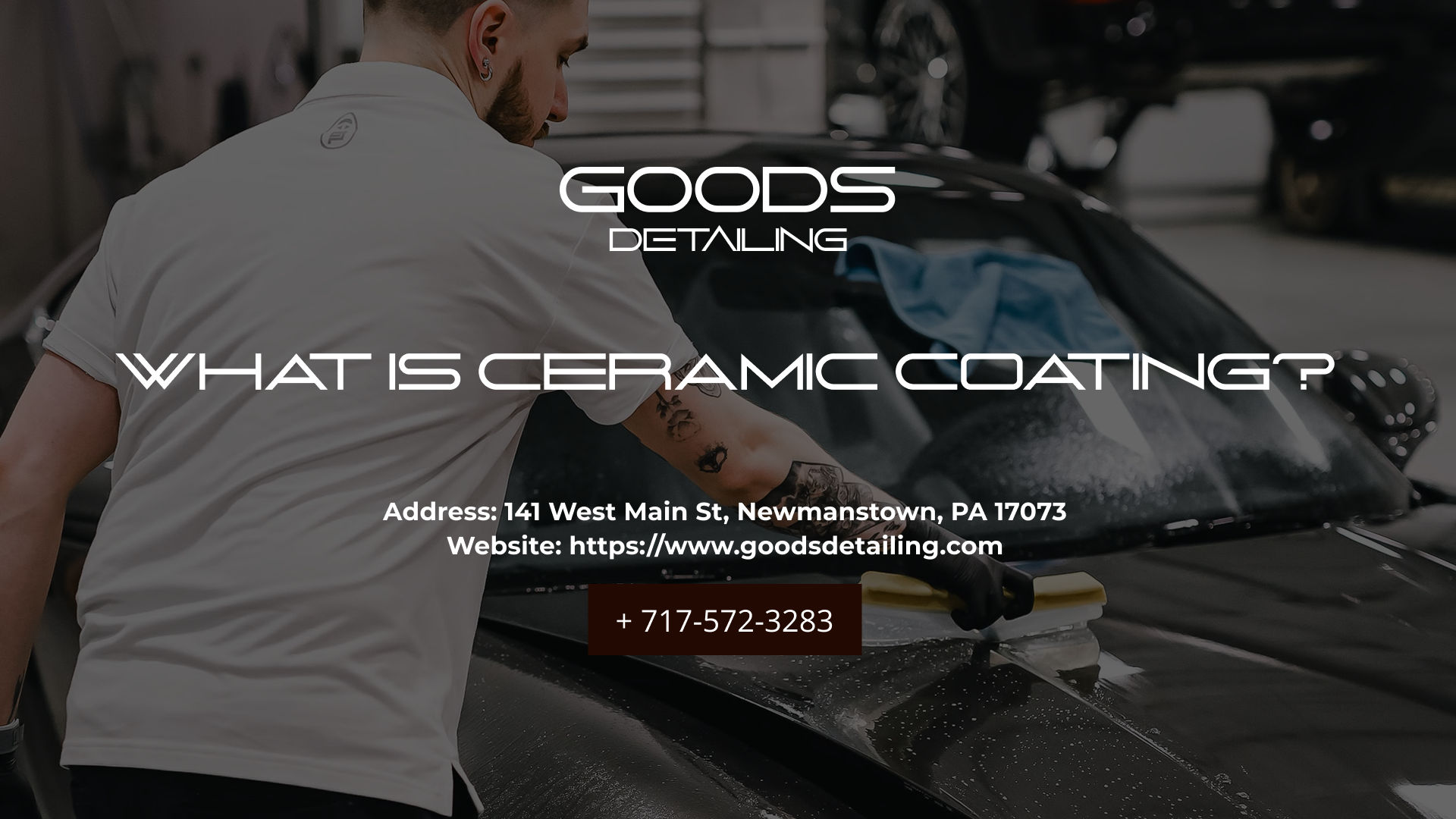
Ceramic coating is a silicon-based liquid formulation that cures into a thin protective film on properly prepared vehicle paint. Unlike traditional wax, which provides temporary surface protection, a cured ceramic coating is designed to remain on the paint for a much longer period. It does not replace the clear coat or provide physical impact protection; instead, it improves surface behavior, environmental resistance, and ease of maintenance.
How Does Ceramic Coating Work?
Ceramic coating works by bonding to properly prepared paint and forming a cured film that changes how water and contaminants interact with the surface. The paint must first be washed and decontaminated, then polished when necessary to remove or reduce surface defects. A panel-preparation product removes remaining polishing oils and residues before application.
The liquid coating is then applied in small sections. During the flash and curing stages, the coating forms a continuous protective film over the prepared surface. Once cured, the film changes how water and contaminants interact with the paint, causing water to bead and release more readily.
Many ceramic coatings are marketed with a 9H pencil-hardness rating, which refers to a standardized hardness test of the coating film. It does not mean the coating is scratch-proof or resistant to impact damage. Ceramic coating can help reduce light surface marring, but proper washing remains essential to preserve the finish.
Benefits of Ceramic Coating Protection
Ceramic coating improves water repellency, resistance to environmental and chemical contamination, gloss retention, and ease of maintenance. These benefits come from the cured coating's ability to create a more resistant and hydrophobic surface over properly prepared paint.
Improved Hydrophobicity and Easier Cleaning
A ceramic-coated surface causes water to bead and release more readily than untreated paint, which can help dirt, road film, and routine contaminants rinse away more easily during washing. The coating does not make the vehicle self-cleaning, but it can reduce how strongly contaminants adhere to the surface and make routine maintenance easier.
Protection Against Environmental Contamination
Ceramic coating helps protect properly prepared paint from routine environmental exposure, including UV radiation, road grime, and chemical contamination encountered during normal driving. It does not provide physical impact protection against rock chips, deep scratches, or other damage that penetrates the coating and clear coat.
Improved Resistance to Light Surface Marring
A cured ceramic coating can provide additional resistance to light surface marring, but it is not scratch-proof. Swirl marks can still develop from improper washing, contaminated towels, abrasive materials, or physical contact, making proper preparation and careful maintenance essential.
Longer-Term Protection Than Traditional Wax
Ceramic coating is designed to provide longer-lasting surface protection than traditional wax, which generally requires more frequent reapplication. The actual service life varies according to the product, installation quality, environmental exposure, and maintenance routine.
Step-by-Step Ceramic Coating Application Process
Ceramic coating application follows four main phases: washing and decontamination, paint correction, panel preparation, and coating application. Each phase prepares the surface for the next and helps the coating bond consistently to properly prepared paint.
Phase 1: Washing and Decontamination
The process starts with a thorough wash to remove loose dirt and surface grime, followed by chemical decontamination to address contaminants that normal washing cannot remove. An iron fallout remover can dissolve ferrous contamination, while a suitable tar remover and clay treatment can address remaining bonded contaminants when necessary.
The goal is to leave the paint clean and smooth before polishing or coating. Wheels should also be cleaned thoroughly because brake dust and other contaminants can transfer back onto nearby surfaces during preparation.
Phase 2: Paint Correction and Polishing
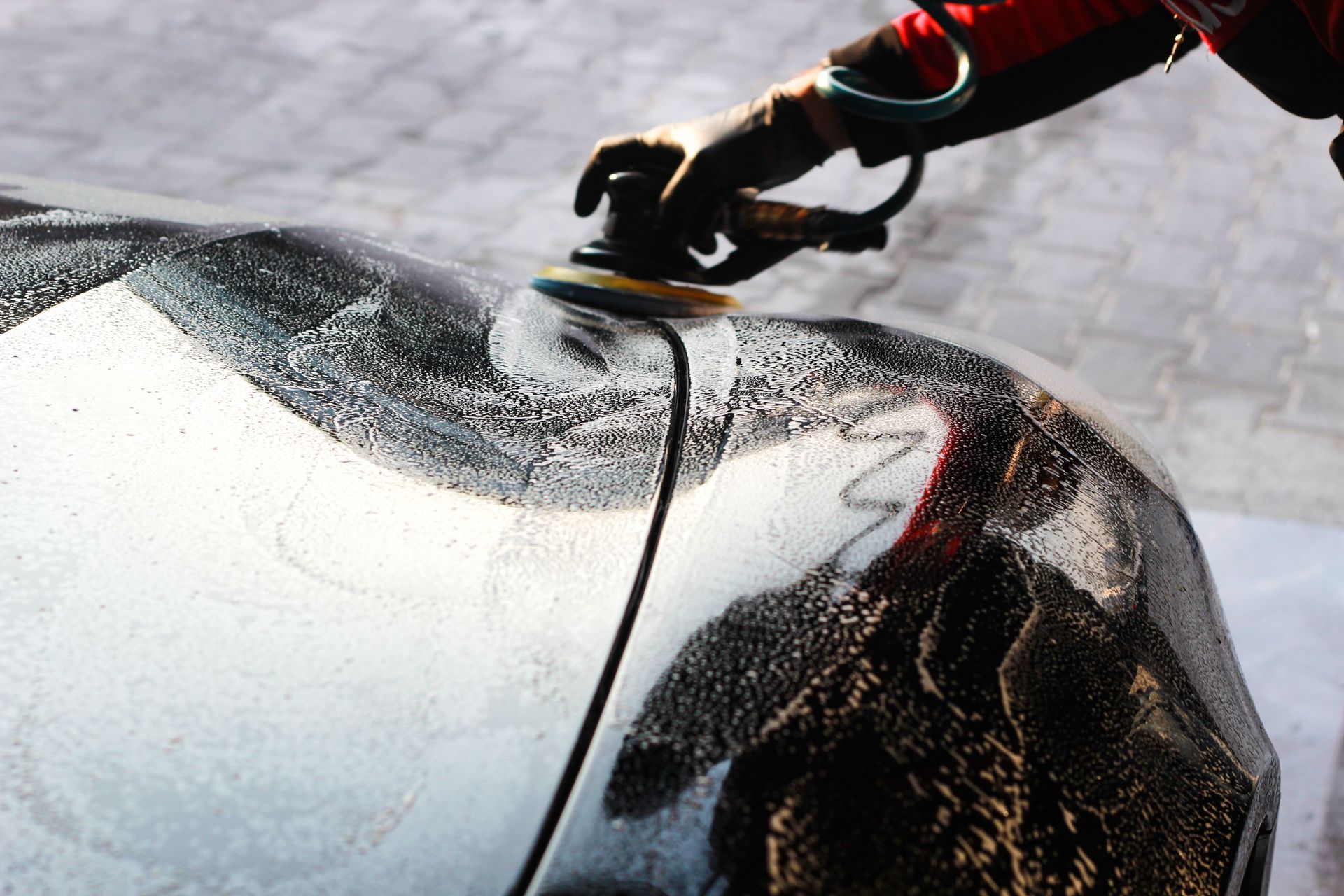
Paint correction removes or reduces visible defects before ceramic coating is applied. Depending on the condition of the paint, the process may involve a one-step polish or multiple stages using a dual-action polisher, cutting compound, and finishing polish.
Correction is important because ceramic coating does not repair existing paint defects. Swirl marks, oxidation, haze, and other imperfections that remain before application can still be visible after the coating cures.
Phase 3: Panel Preparation
Panel preparation removes polishing oils, residues, and other contaminants that could interfere with coating adhesion. An appropriate panel-preparation solution or isopropyl alcohol-based product can be used according to the coating manufacturer's instructions.
The surface should be completely clean before application. Even a thin layer of polishing residue can affect how the coating spreads, flashes, and cures.
Phase 4: Coating Application
The coating is applied to small sections using the applicator specified by the manufacturer. The installer spreads the product evenly, allows it to reach the appropriate flash stage, and then removes excess coating with clean microfiber towels. Flash time varies by product and environmental conditions, so the manufacturer's instructions should determine the working window.
Each completed section is inspected under suitable lighting before the installer moves to the next panel. This panel-by-panel process helps identify streaks or high spots while they can still be corrected rather than after the coating has fully cured.
Optimal Environment and Conditions for Application
Ceramic coating should be applied in a clean, controlled environment where temperature, humidity, lighting, and dust can be managed. Stable conditions give the installer a more predictable application and curing process and reduce the risk of contamination or uneven flashing.
The exact temperature and humidity range depends on the coating system, so the manufacturer's application instructions should determine the working conditions. The vehicle should also be kept out of direct sunlight, and the paint should be cool enough to allow the coating to remain workable during application. A clean indoor workspace helps prevent airborne dust from becoming trapped in the coating.
Curing Time and Post-Application Care
Ceramic coating continues to cure after application, and the required curing period varies by product. The vehicle should remain protected from water, contamination, and unnecessary chemical exposure for the period specified by the manufacturer.
During the early curing stage, rain, sprinklers, and washing can interfere with the coating's development. Once the manufacturer's initial cure requirements have been met, regular maintenance should begin with a pH-neutral wash soap, soft washing tools, and appropriate drying methods. Following the product's post-application instructions is essential because cure time, first-wash timing, and chemical exposure limits differ between coating systems.
Coating Wheels, Glass, and Other Surfaces
Ceramic coatings can be formulated for wheels, glass, and other vehicle surfaces, but each surface requires a product designed for its specific use. Wheel coatings can make brake dust and road grime easier to remove, while glass coatings are designed primarily to improve water repellency and visibility during wet conditions.
Preparation remains important on every surface. Wheels should be thoroughly cleaned and decontaminated before application, while glass requires product-specific cleaning and preparation to ensure clarity and consistent coverage. Coating can also be applied over compatible PPF, provided the coating manufacturer approves the combination.
Professional vs. DIY Ceramic Coating
Professional and DIY ceramic coatings differ mainly in surface preparation, application conditions, installation process, and warranty support. The expected durability depends on the specific coating system, installation quality, environmental exposure, and maintenance rather than chemistry alone.
| Factor | Professional Application | DIY Application |
|---|---|---|
| Surface preparation | Professional washing, decontamination, and paint correction when needed | Owner handles preparation and correction |
| Application environment | Controlled workspace with lighting and dust management | Garage or home environment, depending on conditions |
| Application process | Product-specific application by an experienced installer | Owner follows the manufacturer's instructions |
| Warranty | May include manufacturer or installer warranty support | Depends on the product and manufacturer |
| Durability | Product-dependent and maintenance-dependent | Product-dependent and maintenance-dependent |
DIY coating can produce good results when the paint is properly washed, decontaminated, corrected when necessary, and panel-prepped. Professional installation adds controlled working conditions, specialized equipment, application experience, and warranty support. The appropriate option depends on the vehicle's condition, the coating system, and the level of preparation required.
Maintaining Your Ceramic Coating
Regular washing is essential for preserving ceramic coating performance. A pH-neutral car shampoo, soft microfiber wash media, and a safe drying method can remove accumulated dirt without unnecessarily stressing the coated surface.
A pre-wash with snow foam or a foam cannon can help loosen surface contamination before contact washing. The foam should be used according to the product's instructions and should never be allowed to dry on the vehicle. A ceramic-compatible maintenance booster can also be used when recommended by the coating manufacturer to help maintain water behavior and surface slickness.
Common Ceramic Coating Application Mistakes to Avoid
The most damaging application mistakes occur before the coating is applied. Skipping decontamination, applying the coating over uncorrected defects, or leaving polishing oils and residues on the paint can compromise the final appearance and the coating's ability to perform as intended.
Application timing is another common source of problems. Removing the coating too early can leave excess product behind, while allowing it to flash beyond the manufacturer's recommended working window can make removal more difficult. Following the product-specific instructions and inspecting each section under proper lighting helps prevent high spots, streaks, and uneven coverage.
Special Applications: Matte Paint and PPF-Wrapped Panels
Ceramic coating can be applied to matte paint and PPF when the coating is specifically approved for the surface. The product must be compatible with the finish because a coating designed for glossy paint may alter the appearance of matte surfaces.
On PPF, ceramic coating provides additional hydrophobicity and can make the film easier to maintain, while the PPF itself provides the primary physical protection against impacts and road debris. Compatibility between the coating and film should always be confirmed before application.
Professional Ceramic Coating Services at Goods Detailing
Goods Detailing in Newmanstown, PA applies
SB3 ceramic coatings to cars, trucks, RVs, motorcycles, boats, and construction and farm equipment. The shop serves customers throughout Lebanon, Lancaster, Ephrata, Wyomissing, Palmyra, Lititz, and surrounding areas, with current SB3 packages providing manufacturer-documented protection ranging from 2 to 5 years, depending on the selected system and maintenance.
FAQs
About the Author
Goods Detailing
is based in Newmanstown, Pennsylvania, and has provided automotive and specialty surface protection services throughout the surrounding area since 2019. The shop is an SB3 Certified Installer, licensed and insured, and applies SB3 ceramic coatings to cars, trucks, RVs, motorcycles, boats, and construction and farm equipment, with coating packages currently offering manufacturer-documented protection ranging from 2 to 5 years depending on the selected system and maintenance requirements.
Last updated: August 2026