What Is Ceramic Coating?
Ceramic coating is a silicon-containing liquid coating system that cures into a thin, durable protective film on a properly prepared vehicle surface. Some products are rated to last up to 5 years, depending on the coating system, package, conditions, and maintenance. It adds hydrophobic water beading, UV protection, and chemical resistance, and works on cars, trucks, boats, RVs, and heavy equipment.
Key Takeaways
- Ceramic coating bonds chemically to clear coat and can last up to 5 years, depending on the product and package.
- Professional-grade coatings can use more sophisticated formulations, curing requirements, and application procedures than consumer products; SiO2 concentration alone does not determine durability.
- Ceramic coating helps resist UV rays, bird droppings, tree sap, acid rain, salt, and road debris.
- Wax lasts 1 to 3 months, while ceramic coating lasts years and does not sit as a soft surface layer.
- Thorough cleaning and decontamination are essential before ceramic coating application, while paint correction should be performed when needed to address existing paint defects before coating.
What Is Ceramic Coating?
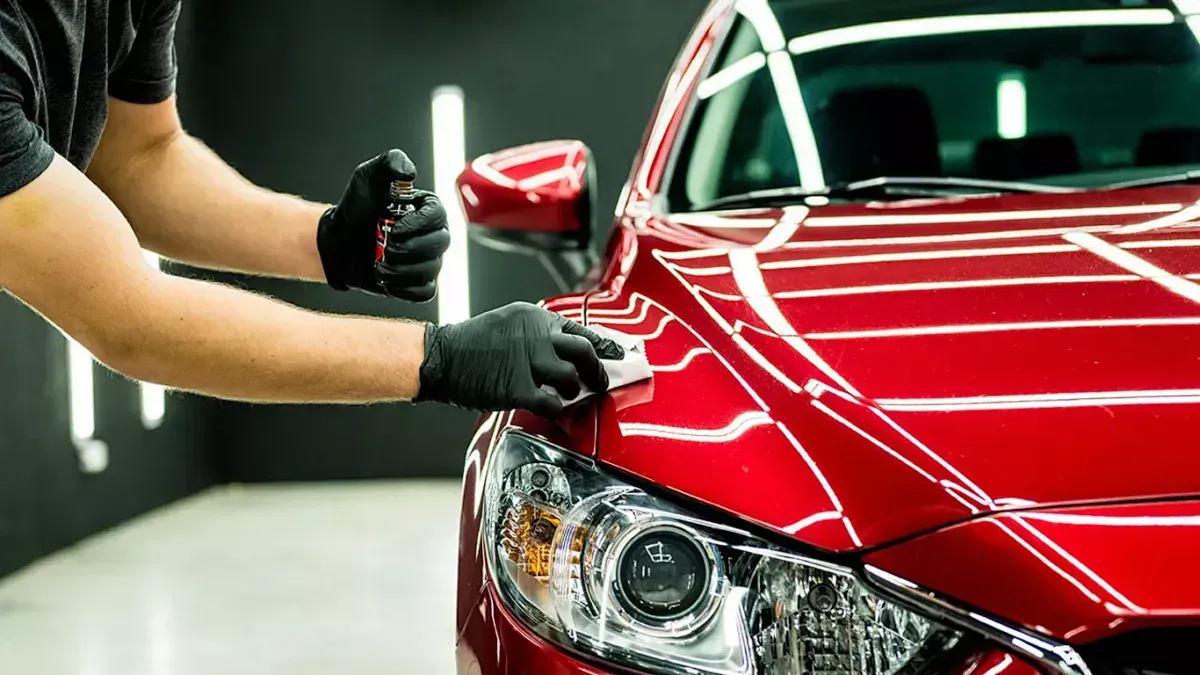
Ceramic coating is a silicon-containing liquid coating system that cures into a thin, durable protective film on a properly prepared vehicle surface. Silicon-containing chemistry, including silica-derived materials, siloxanes, or other coating precursors, plays an important role in many automotive coating systems. When properly applied, the finished layer can last for several years, with some products rated for up to 5 years depending on the coating system, package, conditions, and maintenance. Goods Detailing uses professional ceramic coating systems to protect paint from daily damage and the harsh Pennsylvania weather that tests every finish.
The coating isn't wax, and it's not just sitting on top of your paint. It cures into a bonded protective film on the prepared clear coat, which is why it performs differently from products that primarily form a removable surface layer. Drivers researching whether to ceramic coat a new car are usually after longer protection, easier cleaning, and better gloss without needing to reapply every few weeks.
How Ceramic Coating Works: The Science Behind Paint Protection
Ceramic coating works by curing into a thin, durable film that bonds strongly to the properly prepared clear coat, forming a protective layer over the surface and making it tougher for contaminants to grip. Professional-grade coatings can differ from consumer products in formulation, concentration, curing requirements, and application process, rather than simply being defined by SiO2 concentration alone.
Ceramic coating creates a smoother, more uniform surface that can reduce contaminant adhesion and make the surface easier to clean. That's why the coating is more than cosmetic: it changes how the surface interacts with moisture, road film, and airborne contaminants.
Professional application still depends heavily on preparation, because the coating performs best when applied to a clean, properly prepared surface. Detailers remove bonded contamination, polish out swirls when paint correction is needed, and decontaminate the paint before the coating ever touches the panel. The chemistry may be engineered for durability, but proper preparation and application are critical to achieving the expected performance.
Professional-Grade vs. Consumer-Grade Ceramic Coatings
Professional-grade ceramic coatings usually use more sophisticated formulations, application procedures, and curing requirements than some consumer-grade products, and they are generally designed for longer-term performance than many consumer-grade DIY products, though exact figures vary by manufacturer. The difference isn't just marketing. Durability depends on the overall formulation, surface preparation, application technique, curing process, and maintenance, not SiO2 concentration alone.
Consumer products are easier to buy and apply on your own, but they typically trade some degree of longevity, application control, or installation consistency for convenience. Professional-grade coatings also support more controlled installation, better surface correction, and stronger consistency across larger panels. That's why many owners weighing cost against long-term value end up choosing a shop-installed option.
Key Benefits of Ceramic Coating
Ceramic coating provides hydrophobicity, chemical resistance, protection against environmental contaminants, and a deep glossy appearance. It also helps protect against UV-related degradation, bird droppings, tree sap, acid rain, salt, and road grime, all of which makes it especially useful during Pennsylvania winters and summer sun.
The appearance benefit is immediate and noticeable. Ceramic coating creates a mirror-like gloss that can make paint look deeper and cleaner, especially after proper correction. It also helps preserve the finish by reducing the effects of environmental exposure and slowing the buildup of contaminants on the clear coat.
Hydrophobic Properties and Self-Cleaning Effects
Ceramic coating creates strong water beading and a hydrophobic surface that pushes water into tight droplets and helps contaminants release from the surface more easily. That hydrophobic effect improves dirt shedding and gives the coating its self-cleaning reputation. It doesn't eliminate washing, but it slows down how quickly grime accumulates.
The effect is easy to spot after rain or a rinse. Water pulls away from the panel instead of spreading flat, which leaves less water and residue clinging to the surface. That same property helps during regular maintenance: soap and rinse water move across the panel more easily, so washing usually takes less effort than it would on bare paint.
Ceramic Coating vs. Wax vs. Paint Sealant
Ceramic coating can last up to 5 years with some products and packages, while traditional waxes often last around 1 to 3 months and many paint sealants last roughly 3 to 6 months, depending on the product, environment, and maintenance. The biggest difference comes down to bonding, durability, and longevity. Ceramic coating is generally harder and more resistant to environmental exposure and chemicals than traditional wax, although performance varies by product.
| Protection Type | Durability | Bond Type | Appearance | Maintenance Frequency |
|---|---|---|---|---|
| Ceramic Coating | Up to 5 years depending on product and package | Durable bonded coating layer on prepared clear coat | Deep glossy, mirror-like | Low |
| Wax | 1 to 3 months typically | Physical layer on top of paint | Warm, rich glow | High |
| Paint Sealant | 3 to 6 months typically | Cross-linked polymer layer | Crisp, reflective shine | Moderate |
Wax is easy to apply but requires more frequent reapplication, while paint sealants generally offer longer protection than wax but shorter service intervals than multi-year ceramic coatings.
Where Hardness Fits In
Ceramic coatings can reach up to 9H on the pencil hardness scale, depending on the product and testing method, which is harder than wax and many sealants. However, pencil hardness is a standardized test measurement and should not be treated as a direct measure of real-world scratch resistance. A 9H pencil-hardness rating should not be confused with a 9H rating on the Mohs mineral hardness scale.
Ceramic coating cannot stop rock chips, deep scratches, or existing paint damage, and it won't prevent rust formation if metal is already exposed. A coating may improve resistance to some surface abrasion and wash-related marring, but it does not make the paint scratch-proof. A good installer will walk through what the coating can and cannot protect against before the work begins.
Cost Comparison: Long-Term Value
Ceramic coating typically costs more upfront than traditional wax or DIY kits, but understanding ceramic coating cost in the context of long-term protection changes the math. Trucks and SUVs can cost more to coat than sedans because they have more surface area to prep and cover. However, when the upfront cost is spread across several years of protection rather than repeated waxing, the price difference can become much smaller.
The value becomes even clearer for vehicles exposed to frequent sun, road salt, or highway driving. A quality ceramic coating can protect for several years while making routine washing and maintenance easier. Instead of focusing only on the initial price, vehicle owners in Wyomissing, PA, and nearby areas may find it more useful to compare the cost of protection on a yearly basis.
The Ceramic Coating Application Process
Hands-on application typically takes several hours and varies by vehicle size, paint condition, amount of paint correction required, coating system, and application procedure. A sedan in good condition may require less time than a larger vehicle or one that needs extensive correction. Total shop turnaround, from drop-off to pickup, often spans multiple days for some professional packages, because the vehicle needs time for paint correction beforehand and a protected curing period afterward, not because the coating itself takes several days to apply.
| Stage | Typical Duration | What Happens |
|---|---|---|
| Prep and paint correction | Several hours, often the same day or longer when extensive correction is needed | Wash, decontaminate, and polish the surface |
| Hands-on application | 4 to 8 or more hours, depending on vehicle size | Apply the coating by hand and level each panel |
| Curing hold before pickup | Remaining time until total turnaround reaches 2 to 5 days | Vehicle stays in a controlled bay for the manufacturer's recommended initial cure period, often at least 24 to 48 hours before water exposure |
Paint correction matters because ceramic coating cannot fix existing paint damage. It can protect the finish that's already there, but it cannot hide rock chips, deep scratches, or rust. Proper preparation helps the coating bond correctly and produces a more uniform final finish.
During the curing hold, the coating continues to cure and develop its intended properties. A rushed cure can interfere with the coating's intended performance and finish.
Professional application also requires appropriate protective equipment and ventilation according to the product's safety data sheet.
Common Myths About Ceramic Coating
Ceramic coating comes with a few persistent myths, mostly from marketing that overstates what the product can actually do. Here's what's accurate and what isn't.
Myth: Ceramic coating is permanent.
Fact: Ceramic coating wears away over time. Water beading and dirt shedding gradually decline as the layer ages, and most coatings need reapplication or maintenance products to keep performing well.
Myth: Ceramic coating makes paint scratch-proof.
Fact: Ceramic coating is not scratch-proof, even at 9H pencil hardness. It can improve resistance to light marring, but rock chips, deep scratches, and impact damage can still break through the finish.
Myth: Once coated, a car never needs washing again.
Fact: Coated cars still need regular washing. The coating makes cleaning easier and helps contaminants release from the surface, but dirt, pollen, and road film still collect over time.
Myth: Ceramic coating fixes existing paint damage.
Fact: Ceramic coating protects the finish that's already there. It does not remove swirl marks, scratches, or oxidation, which is why paint correction has to happen before coating, not after.
Ceramic Coating for Different Vehicles and Surfaces
Ceramic coating works on cars, trucks, RVs, motorcycles, marine vessels, construction equipment, and farm equipment. It can protect paint, wheels, glass, matte finishes, and even aluminum surfaces when the coating is specifically formulated, tested, and approved for the intended surface. Different substrates can require different coating formulations and preparation procedures, so one ceramic coating should not be assumed to work equally well on every surface.
Specialized coating systems may be formulated for specific metal or equipment surfaces, but their performance depends on the substrate, product chemistry, and intended application. Different surfaces, including matte paint and paint protection film, need different product formulations, so it's worth checking with an installer before assuming one product suits every finish.
The service is useful across Pennsylvania because road salt, rain, and UV exposure affect more than just passenger cars. A truck, RV, or boat may need the same protection principles as a sedan, only with different prep and product choices.
Warranty Coverage and Long-Term Performance
Ceramic coating warranties often include maintenance rules and conditions that can affect coverage. The coating itself also changes over time, so water beading and dirt shedding decline as the layer wears away gradually. The actual protection period still depends on the product grade, the specific package, and upkeep.
Strict wash methods, approved maintenance products, and inspection requirements often shape warranty validity. If the finish is neglected, the warranty can fail even when the coating is still present on the car. Owners deciding whether to ceramic coat a new car often weigh warranty terms against real-world care requirements: a warranty period does not necessarily mean the coating will perform identically for that entire period under every condition. The strongest coatings deliver long-term value, but they still rely on correct maintenance to keep performance high.
Professional Ceramic Coating Services at Goods Detailing
Goods Detailing offers ceramic coating in Newmanstown, PA, using SB3 coatings for cars, trucks, motorcycles, RVs, boats, and equipment. The process includes paint correction, decontamination, and controlled application so the coating can be properly applied to the prepared surface. Service coverage reaches Lebanon, Lancaster, Ephrata, Wyomissing, Palmyra, and Lititz.
SB3 coatings fit the goal of long-lasting protection, gloss, and hydrophobic performance. Goods Detailing applies them as part of a finish-preservation approach built for Pennsylvania driving conditions, road salt, and seasonal weather changes.
FAQs
About the Author
Every ceramic coating job at Goods Detailing starts with the same chemistry principles covered in this guide. Based at 141 West Main Street in Newmanstown, PA since 2019, our SB3-certified team applies that same understanding of coating chemistry, surface preparation, and curing behavior to every car, truck, and motorcycle that comes through the shop.
Last updated: August 2026.